

HOW TO MEASURE YOUR CALORIE EXPENDITURE
May 2026
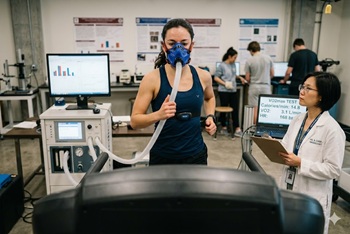
If you have ever tried to calculate your Total Daily Energy Expenditure (TDEE) using an online calculator, you were likely given a highly specific number. However, from a clinical and physiological standpoint, that number is merely an educated guess. One of the most common complaints I hear from patients is the frustration of meticulously counting calories and believing they are in a deficit, yet the scale refuses to budge. They feel like they are doing everything right, but the weight isn't coming off. This disconnect usually occurs because calorie expenditure is a highly dynamic, chemically complex process that is difficult to estimate. Consequently, determining exactly how many calories you burn in a day is one of the most challenging tasks in nutritional science.
The Variables Controlling Your Burn Rate
Your daily energy expenditure is a moving target governed by several distinct, fluctuating components:
- Basal Metabolic Rate (BMR) & Lean Mass: BMR is the energy required to keep your vital organs functioning at complete rest. BMR is heavily dictated by your lean body mass. Muscle tissue is more metabolically active than fat tissue, meaning two individuals of the same height and weight can have drastically different baseline energy requirements.
- Non-Exercise Activity Thermogenesis (NEAT): NEAT encompasses all the energy expended during daily movement that isn't intentional exercise (e.g., walking to your car, typing, standing, fidgeting). NEAT is highly variable, and your body may down-regulate these actions when you are in a caloric deficit, meaning your body tries to "save" energy by making you move less throughout the day.
- Thermic Effect of Food (TEF): This is the amount of energy your body utilizes to digest, absorb, and metabolize nutrients. Protein requires more energy to process than dietary fats or highly refined carbohydrates, so the macronutrient composition of your diet directly affects your daily burn.
- Exercise Activity Thermogenesis (EAT): EAT is the calories burned during structured physical training.
The Limits of Estimation
Most people rely on predictive mathematical formulas (e.g., the Mifflin-St Jeor equation and the Harris-Benedict equation) or consumer fitness trackers to estimate their calorie expenditure. While formulas provide a reasonable starting baseline, they cannot account for your unique metabolic efficiency or daily NEAT variations.
Similarly, wrist-worn fitness trackers (e.g., Fitbit, Garmin) primarily rely on heart rate algorithms and accelerometers to estimate energy expenditure. Because an elevated heart rate can be caused by stress, caffeine, or dehydration rather than actual mechanical work, these devices routinely miscalculate true caloric expenditure, often overestimating the burn by a significant margin.
The Clinical Standard: Indirect Calorimetry
In clinical and research settings, energy expenditure is measured using indirect calorimetry.
The physiological principle of indirect calorimetry is straightforward: every calorie burned by the body requires a specific volume of oxygen VO2) and produces a corresponding volume of carbon dioxide (VCO2). By analyzing these gases as an individual inhales and exhales, scientists can calculate precise energy expenditure.
To capture these measurements, a subject must breathe into a specialized face mask connected to a metabolic cart, or they must live inside a sealed, climate-controlled metabolic chamber. While indirect calorimetry is the gold standard for accuracy, its real-world limitations are obvious: the equipment is highly expensive, intrusive, and impractical for measuring long-term energy expenditure in everyday life.
The Practical Solution: The Data-Driven Spreadsheet
If laboratory measurements are impractical and formulas and trackers are unreliable, how do you find your actual daily calorie expenditure? The answer lies in the First Law of Thermodynamics: energy cannot be created or destroyed; it can only be stored—as fat, muscle, or other body tissue—or expended. Using your daily calorie intake and change in body weight over a 28-day period, our spreadsheet can provide an accurate estimate of your average daily calorie expenditure.
How it works:
- Input Your Daily Data: Log your daily weight and calorie intake. You should weigh yourself in the morning before eating. If you have a bioimpedance scale, you can also log your body fat and muscle mass. The spreadsheet will calculate your energy expenditure based on change in total body weight and change in muscle/fat mass. Results are reported separately.
- 28-day measurement: Daily weight variations are noisy, affected by fluctuations in water retention, glycogen storage, and digestive bulk. By collecting data over a 28-day period and utilizing regression analysis, these variations are smoothed out, providing an accurate estimate of body mass changes.
- Revealing Your True Burn: By analyzing the precise rate of change in your body mass over time relative to the exact energy consumed, the spreadsheet calculates your true average daily energy expenditure (TDEE).
Achieving Precision
The accuracy of the calculator relies entirely on the quality of the data entered. To provide the best estimate, the following is required:
- Count all your calories: This is the most crucial and tedious part. If calories are not recorded correctly, the calculations will be inaccurate. Everything you eat, including condiments (e.g., ketchup, salad dressing), needs to be measured and logged correctly. If you drink alcohol, you should measure your serving (e.g., one glass of wine is 150 ml) rather than pouring directly into a glass and calling it one drink. Apps like MyFitnessPal and Fitbit can help with this process.
- Weigh yourself: Weigh yourself each morning upon rising and before you eat.
📱 Open in Google Sheets
💻 Download Excel File
